
The Strasburg Boiler Explosion - Part 3
The Chemical Release – Ammonia Systems
Secondary Failure: The Anhydrous Ammonia Release
In the Part 2, we examined the steam explosion that acted as the catalyst for the events of July 30, 2021. However, the immediate danger did not end with the dissipation of the blast wave.
The Valley Milk Products facility utilizes a significant quantity of Anhydrous Ammonia (CAS 7664-41-7) for its industrial refrigeration processes. When the boiler failed, it created a chain reaction that compromised this system, leading to a hazardous material release that triggered a multi-agency response.
The Mechanism of Release
The release was a direct result of the mechanical force described in the Fire Marshal’s investigation. As the boiler was propelled through the partition wall, it struck a series of jacketed process tanks.
According to the incident reports, the displacement of these tanks severed the "ammonia refrigeration liquid and suction lines" serving the first two vessels. This breach opened the pressurized system to the atmosphere, allowing liquid ammonia to escape and immediately flash into vapor.
Inventory Loss: Based on the facility's reporting, approximately 6,000 lbs of ammonia were released during the event. Engineering estimates suggest that the vast majority of this inventory vented within the first five minutes of the pipe rupture, creating an immediate, high-concentration vapor cloud within the facility.
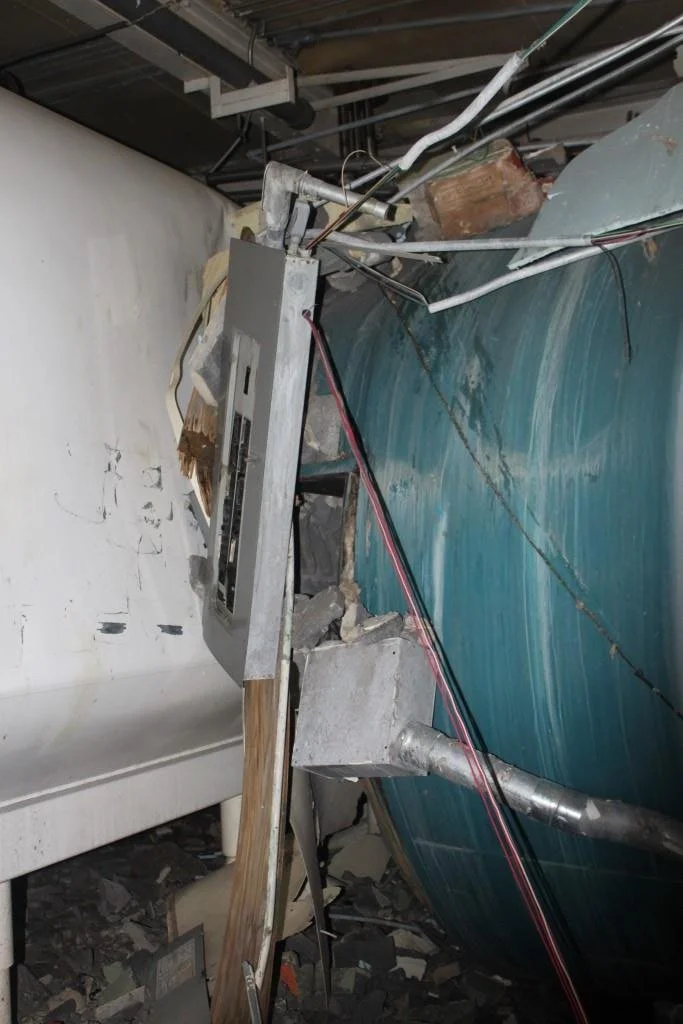
Boiler that impacted jacketed vessel.
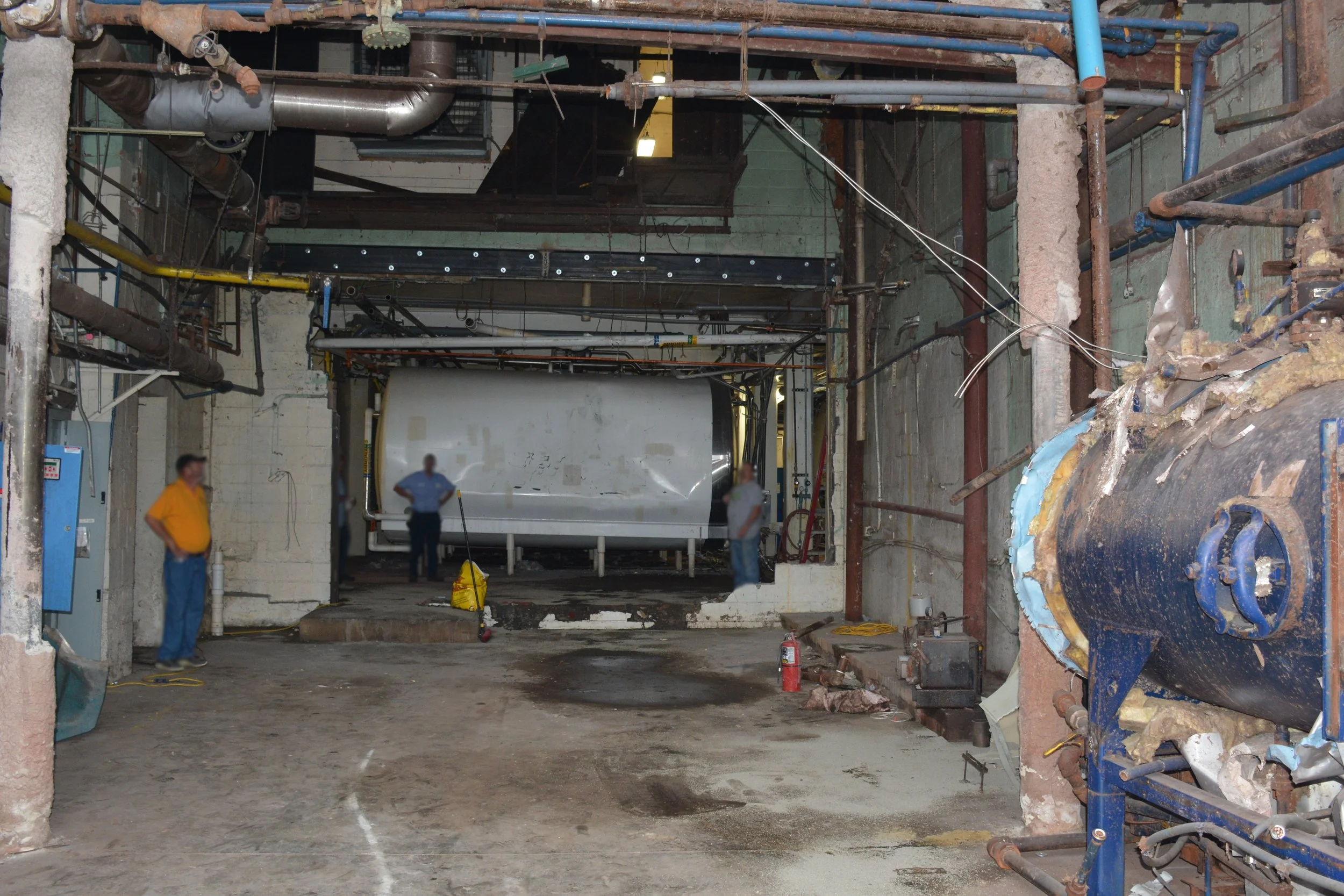
View after removal of boiler showing damaged vessels and lines.
Chemical Hazards & Public Safety
Anhydrous Ammonia is classified as an "Extremely Hazardous Substance" under SARA Title III. It is corrosive to the skin, eyes, and lungs, and has a very low odor threshold (detectable at 5-50 ppm), which serves as an early warning property.
The release prompted immediate protective actions:
Evacuation: Local authorities evacuated twenty residents from the immediate vicinity due to the strong odor of ammonia detected around the boiler room and surrounding streets.
Air Monitoring: Emergency crews and contractors monitored air quality levels. Fortunately, the release occurred in the early morning hours when dispersion conditions were favorable.
Outcome: Despite the scale of the release, there were no reported chemical exposures or injuries to onsite personnel or offsite residents.
Containment and Remediation
The response required specialized intervention. A qualified industrial ammonia contractor was deployed to secure the facility. On the day of the incident (July 30), the contractor successfully isolated the compromised sections of the system. By the following day, the remaining ammonia vapor was evacuated from the system to ensure safety for the investigation team.
Environmental Impact: While the majority of the ammonia vented to the atmosphere, a portion of the release was captured by the facility's drainage system. Approximately 155 lbs of ammonia were detected in the wastewater equalization tank. This contaminated water was isolated and slated for specialized offsite disposal to prevent downstream environmental damage.
Conclusion
The Strasburg incident serves as a case study in "knock-on" effects. The facility’s safety systems were designed to handle standard operational risks, but the catastrophic nature of the boiler explosion bypassed these safeguards by physically destroying the containment infrastructure.
Sources
Shenandoah County Fire Marshal’s Report for Incident Number 21-273. Obtained via FOIA. Obtained via FOIA.